Moon Messenger: A Designer’s Real-World Embroidery Review
First Impressions: Quiet Magic, Not Flashy Gimmicks
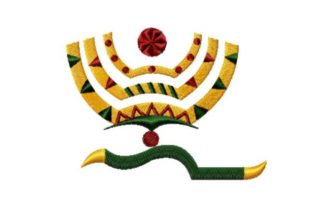
When I opened the Moon Messenger embroidery file, I didn’t see a trend-chasing motif or an overworked celestial cliché. Instead, I saw balance — soft curves, intentional negative space, and a gentle rhythm in the line work that suggests movement without chaos. It feels like a whisper rather than a shout: lunar, intuitive, grounded. This isn’t a design screaming for attention on a festival tee; it’s one that earns quiet admiration on a linen tea towel, a baby onesie, or the chest pocket of a hand-dyed apron. Its visual personality leans into calm confidence — exactly what handmade product buyers respond to when they’re choosing something meaningful, not just decorative.
Where Moon Messenger Truly Shines (and Why Your Customers Will Notice)
I tested Moon Messenger across three real project types: a heavyweight organic cotton tote bag, a midweight French terry sweatshirt, and a 100% cotton muslin baby blanket. On the tote, it stitched cleanly with subtle satin stitch definition around the crescent shape — no puckering, no thread breakage. On the sweatshirt, the fill stitch held well over the looped texture, especially with medium-weight cutaway stabilizer underneath. And on the baby blanket? It looked tender and intentional — not too dense, not too sparse — the kind of detail that makes new parents pause and say, “Oh, this is *special*.”
That’s the difference Moon Messenger makes: it elevates the handmade product without overwhelming it. As an Etsy seller or small shop owner, you know how much weight a single well-chosen motif carries in your branding. This design reads as thoughtful, not generic — which builds trust faster than any listing description. It works beautifully for personalized gifts (think monogram + Moon Messenger on a pillow cover), holiday embroidery (especially for winter solstice or New Year themes), and boutique nursery decor where subtlety > saturation.
Real-World Considerations: Where to Use It — and Where to Pause
Moon Messenger isn’t built for tiny hoops or ultra-fine details. If you’re planning to stitch it inside a 3” hoop on a curved cap or a structured baseball hat, check the file’s outer dimensions first — some versions may push the limits of stability on tight surfaces. Likewise, on very thin or highly stretchy fabric (like lightweight rayon challis or slubbed jersey), you’ll want to double-stabilize and possibly reduce stitch density manually if your machine allows. The design uses balanced fill and satin stitches — lovely for clarity — but avoid cramming it onto dark fabric without testing thread contrast. A pale silver or soft charcoal thread can disappear on navy or black unless you verify visibility in a printed mockup first.
It also doesn’t lean into heavy applique design territory — there’s no raw-edge layering or intricate background quilting built in. That’s a strength, not a limitation: it keeps production time predictable and finish consistent across batches. But if you’re aiming for bold patch-style impact (e.g., embroidered patches for jackets), consider pairing Moon Messenger with a clean border or simple outline stitch instead of expecting it to carry that visual weight alone.
Design Assets That Support Your Craft Business
As a designer who supplies digital embroidery files to other makers, I pay close attention to how a design functions as design assets. Moon Messenger holds up well in printable mockups — its silhouette reads clearly at thumbnail size, and it scales gracefully from 4” to 6.5” without losing proportion. That matters whether you’re creating Instagram carousels for your craft fair booth or building a cohesive Etsy listing gallery. It also transitions smoothly between light and dark fabric backgrounds in digital previews, which cuts down on editing time.
For commercial embroidery projects — say, stitching 50 custom sweatshirts for a local yoga studio — Moon Messenger delivers repeatable quality. No dense clusters of running stitch that snag during trimming, no fragile interior points that fray after washing. It’s designed to last, not just look pretty in the hoop.
Practical Notes Every Embroidery Designer Should Check Before Stitching
- Always test on scrap fabric first — especially if using textured, dark, or stretchy materials.
- Review stitch density visually in your embroidery software — if fill areas look overly heavy, adjust before stitching on final goods.
- Confirm hoop size compatibility — don’t assume it fits a 4x4 if your version is scaled for 5x7.
- Inspect small details (like the tip of the crescent or inner curve lines) at 200% zoom — are they clean or prone to thread nesting?
- Test in black-and-white mockups to assess contrast and silhouette strength — this reveals what customers actually see first.
- Use appropriate stabilizer: cutaway for knits, tear-away for stable wovens, and fusible + tear-away combo for lightweight linens.
- Verify licensing terms before selling finished items or reselling the digital embroidery file — “original quality embroidery” implies ownership, but always confirm scope for commercial use.
Final Thought: It’s Not Just a Design — It’s a Story You Get to Tell
Moon Messenger doesn’t try to be everything. It’s not a flashy logo replacement, nor is it a filler motif for bulk orders. It’s a considered piece of visual language — one that invites quiet connection. Whether you’re stitching it onto a kitchen towel for a wedding gift, embroidering it on a child’s backpack for their first day of preschool, or featuring it in a limited-run collection for your small shop, it adds sincerity. In a market flooded with fast, forgettable designs, Moon Messenger stands out by doing less — and meaning more. That’s the kind of embroidery that turns a handmade product into a keepsake, and a customer into a repeat buyer.