Santa Claus Gnome
First Impressions: Cheerful, Compact, and Instantly Recognizable
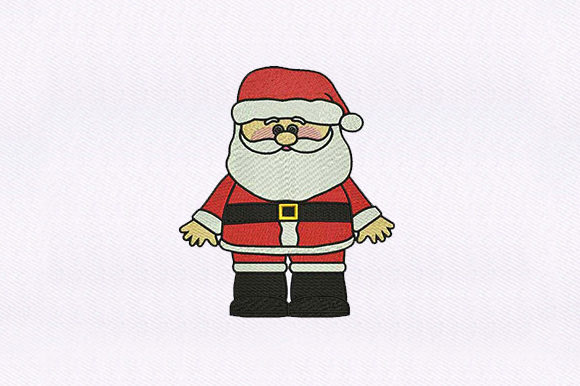
When I opened the Santa Claus Gnome embroidery file, what struck me first wasn’t technical precision—it was personality. This isn’t a stiff, overly detailed holiday icon; it’s a friendly, slightly whimsical gnome wearing a red-and-white cap, rosy cheeks, and a twinkle in its stitched eye. The proportions are balanced for small-to-medium hoop sizes—no sprawling limbs or awkward spacing—and the facial features land cleanly without relying on tiny satin-stitched details that vanish on low-density fabric. It reads well at 3.5" tall, which makes it ideal for real-world applications: baby onesies, pocket patches, tea towel corners, or the front chest of a relaxed-fit sweatshirt.
A Real Project Test: Embroidering It on a Linen-Cotton Kitchen Towel
Last week, I used Santa Claus Gnome on a natural linen-cotton blend towel for a local boutique’s holiday collection. I chose medium-weight cutaway stabilizer and tested thread colors on scrap first—especially the beard white, which needed slight warmth to avoid looking chalky against the off-white fabric. The design stitched out cleanly: no thread breaks, no puckering, and the fill stitches laid flat even across the subtle texture. Customers responded immediately—not just to “it’s cute,” but to how *handmade* it felt. That matters. When your embroidered patch or tote bag design carries warmth and intention, buyers connect faster. Santa Claus Gnome delivers that quietly, without shouting.
Where It Shines (and Where to Pause)
Santa Claus Gnome works beautifully on:
- Custom apparel: Sweatshirts, crewneck tees, and lightweight hoodies—especially when placed on the left chest or sleeve cuff.
- Embroidered patch: Stable enough for iron-on or sew-on backing, with clean edges that won’t fray after washing.
- Baby embroidery: Gentle scale and rounded shapes suit onesies, burp cloths, and crib mobiles—just confirm thread safety if selling commercially.
- Tote bag design: Holds visual weight on canvas or duck cloth without overwhelming the fabric.
- Holiday embroidery for aprons, pillow covers, and nursery decor—its charm feels personal, not mass-produced.
Use caution with:
- Stretchy fabric: Requires excellent stabilization—test on jersey or rib knit before committing to a full run.
- Dark fabric: The white beard and hat trim need high-contrast thread (e.g., bright white or ecru) to stay legible. Always preview in grayscale mockups.
- Curved surfaces like caps: The base shape is stable, but avoid placing it too close to the bill curve unless you’ve verified hoop clearance and fabric tension.
- Thin or sheer fabric: Backing may show through—consider a light tear-away + wash-away combo or switch to an applique design version if available.
Design Integrity Meets Commercial Practicality
As someone who supplies digital embroidery files to Etsy sellers and small shop owners, I pay close attention to how a design holds up under repeated use—and Santa Claus Gnome passes that test. Its stitch density feels intentional: dense enough to read clearly on textured towels or fleece, but not so heavy it gums up lightweight cotton or adds stiffness to baby items. There’s no unnecessary underlay cluttering corners or over-stitching tiny elements. That means fewer trims, less thread waste, and smoother transitions between machines—whether you’re running a Brother SE600 or a commercial Tajima.
For craft business owners, this matters beyond aesthetics. A clean, reliable machine embroidery design builds customer trust. When a buyer orders a personalized gift—say, a monogrammed Santa Claus Gnome tote for a teacher—they’re not just buying stitching. They’re buying confidence that it’ll arrive crisp, consistent, and joyful. That perception lifts perceived value, supports premium pricing, and encourages repeat orders.
Designer Notes You’ll Actually Use
Before stitching Santa Claus Gnome into your next finished product, here’s what I do—and recommend:
- Test on scrap fabric using your exact stabilizer, thread, and machine settings—not just once, but twice: one with your intended fabric, one with a similar dark fabric to check contrast.
- Review stitch density visually, not just numerically. Zoom in on the beard and cap brim—do fill stitches nest evenly? Are satin-stitched areas smooth, or do they look bunched?
- Confirm hoop size compatibility. If your smallest hoop is 4x4", verify the design fits comfortably inside—not just technically, but with breathing room for hooping ease.
- Inspect small details like the nose highlight or eye dot. On lower-res screens or printed mockups, those cues can blur—so if you’re creating printable mockups for your Etsy listing, zoom to 200% and ask: “Would a buyer still feel the charm?”
- Check licensing. Since Santa Claus Gnome is marketed as a machine embroidery design for your next sewing project, confirm whether your intended use—like selling embroidered sweatshirts or bundling the file with other digital products—falls within permitted commercial terms.
Final Thought: It’s Not Just Holiday Embroidery—It’s a Story Starter
I’ve seen dozens of Christmas-themed embroidery files come and go. Most fade into seasonal background noise. Santa Claus Gnome doesn’t. It lands with quiet confidence—friendly but not cloying, festive but not frantic. Whether you’re stitching it onto a handmade apron for your food blogger client, turning it into a limited-run embroidered patch for a craft fair, or building a cohesive holiday collection for your small shop, it adds warmth without demanding attention. That balance—between charm and clarity, simplicity and character—is rare. And for designers, sellers, and makers who care how their work is experienced, not just how it’s made, that’s everything.