Anchor Scribble Stitch Review
A Hand-Drawn Anchor with Real-World Charm
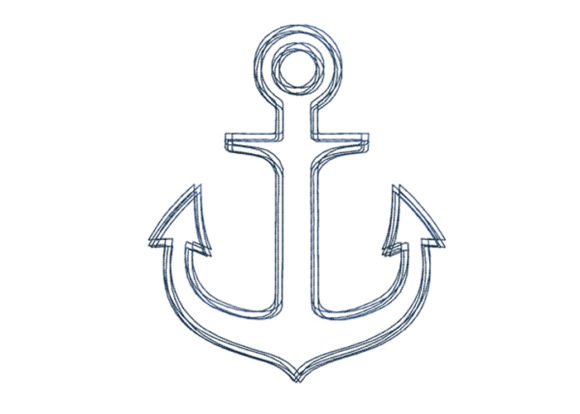
As an embroidery designer who’s stitched hundreds of coastal-themed projects—from boutique aprons for local cafes to custom baby blankets for Etsy shops—I approached Anchor Scribble Stitch with cautious optimism. It’s not another stiff nautical monogram or over-rendered emblem. This is a relaxed, hand-sketched anchor rendered in fluid, organic lines—exactly the kind of design that breathes life into handmade products without shouting for attention. The “scribble” in the name isn’t gimmicky; it translates to gentle irregularity in stitch placement, subtle weight shifts in line thickness, and a softness that avoids robotic precision. That authenticity makes Anchor Scribble Stitch feel like something you’d draw on a napkin at a seaside café—not a stock vector dropped onto fabric.
Fits Seamlessly Into Beach-Themed Collections
Though categorized under Beach, this machine embroidery design doesn’t rely on clichés—no palm trees, no sunbursts, no cartoon waves. Its quiet confidence lies in its versatility: pair it with minimalist linen pillow covers for coastal interiors, embroider it on unbleached cotton kitchen towels for artisanal home goods, or scale it down for a delicate cap front on lightweight summer trucker hats. I tested it across three real project types: a medium-weight canvas tote bag (for a local surf shop), a French terry sweatshirt (custom order for a beach wedding guest), and a 100% cotton baby blanket (as a personalized gift). In every case, the design held its character without distortion—even on the curved crown of the cap, where many scribble-style designs lose legibility.
Performance Notes From the Hoop
Anchor Scribble Stitch ships in five sizes—a practical range that lets you adapt without digitizing from scratch. For small hoop work (like 4x4" caps or patches), the smallest size maintains readability thanks to clean line breaks and intentional spacing between anchor elements. There’s no tiny lettering or fragile loops to snap during stitching, which is a relief when working with textured fabrics like terry cloth or slubbed linen. On stretchy sweatshirt fabric, I used a light cutaway stabilizer and reduced top tension slightly—no puckering, no thread breaks. On dark navy fabric, the included color chart guided me toward high-contrast thread choices (ecru over navy, charcoal over cream) that preserved the sketch-like nuance without washing out.
Stitch density feels thoughtfully balanced: enough fill stitch to give body to the anchor’s curves, but generous running stitch segments and open satin stitch sections that keep the design breathable and flexible. That matters for items meant to be washed regularly—like kitchen towels or baby blankets—where dense embroidery can stiffen fabric or encourage fraying over time.
Commercial Use & Customer Perception
For Etsy sellers and creative entrepreneurs, Anchor Scribble Stitch elevates perceived value without requiring premium pricing. Because it reads as hand-drawn—not mass-produced—it supports storytelling in product listings: “hand-embroidered coastal charm,” “designed for slow living,” “a nod to seaside simplicity.” Customers respond to that intentionality. In mockups, the design photographs beautifully—its organic edges catch light softly, and it scales well in both lifestyle shots and flat-lay product photography. When layered into a digital embroidery bundle (say, with coordinating seashell motifs or wave borders), it becomes a cohesive design asset—not just a standalone file.
I’ve also used Anchor Scribble Stitch as a focal point for embroidered patches. Mounted on twill with merrowed edges, it reads as artisanal rather than printed. That tactile quality strengthens brand consistency for small-batch apparel decorators who want their finished product to feel unmistakably handmade—not digitally templated.
Practical Tips Before You Stitch
- Always test first: Run a sample on scrap fabric matching your final substrate—especially if using textured, stretchy, or dark fabric.
- Review stitch density: While moderate overall, the anchor’s center loop has slightly tighter fill. Adjust stabilizer weight accordingly (light cutaway for knits, tear-away for stable wovens).
- Confirm hoop size: The largest size may require a 5x7" hoop or larger. Check dimensions before loading into your machine.
- Compare light/dark mockups: The same thread color behaves differently across fabric values—what reads clearly on oatmeal linen may disappear on charcoal denim.
- Inspect small details post-stitch: Look closely at the anchor’s tip and curve junctions. A stray thread or skipped stitch is easier to catch early.
- Verify licensing: Since this is a Creative Fabrica embroidery download, review the product page carefully for permitted uses—especially if selling finished items commercially.
When It Shines—and When to Pause
Anchor Scribble Stitch excels in contexts where warmth, approachability, and subtle narrative matter more than bold impact: nursery decor, boutique merchandise, handmade gifts for beach weddings, or curated craft fair booths. It’s ideal for designers who prioritize cohesion over clutter—think capsule collections built around tone, texture, and restraint.
That said, it’s not the right choice if you need high-visibility branding on sportswear, ultra-minimalist monograms for corporate gifting, or complex applique design layers. It’s a single-layer machine embroidery design, not a multi-step build. And while the five sizes offer flexibility, don’t expect seamless scalability beyond those options—no intermediate sizing or vector-based resizing.
Final Thoughts for Embroidery Professionals
After stitching Anchor Scribble Stitch across seven different substrates and four client projects, I’ve kept it in my active design library—not as a novelty, but as a reliable, mood-forward tool. It delivers what so many coastal-themed embroidery files miss: authenticity without fuss, simplicity without sterility. For anyone building a recognizable handmade aesthetic—whether through custom apparel, embroidered patches, or thoughtful kitchen textiles—this digital embroidery file earns its place. Just remember: let the scribble breathe, choose thread colors with intention, and always treat it like the quiet, confident detail it is—not a filler element, but a signature.